Product Designer
3 Product Designers
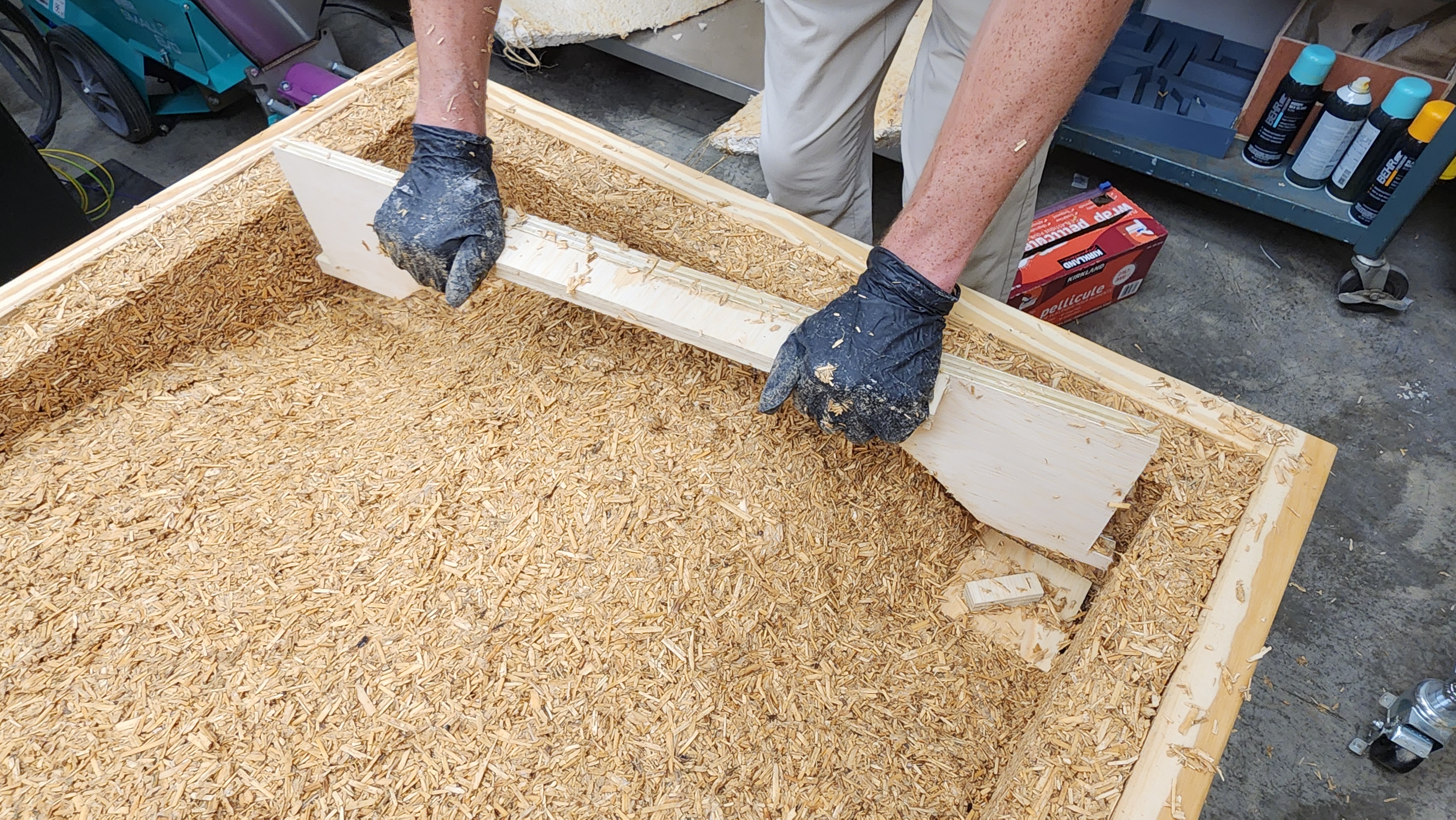
Carpentry and Mycelium Packing
Rhino 3D, Grasshopper, Adobe Creative Suite
Each time a construction crew breaks ground on a building, 30% of the materials brought to the site will end up as waste. Amongst the most common of these materials is a surplus on concrete. In many underprivileged parts of the world, this is the most accessible and cost-effective building material. With 85% of all construction and demolition waste being concrete, there is a need to reduce this environmental impact.
Mycelium is a biodegradable and regenerative material made of fungal hyphae that in essence acts as a glue to bind fibers like the ones in agricultural waste. There are tons of examples of Mycelium forging new paths in product design and other objects of the sort. From a functioning canoe to leather goods and clothing, Mycelium continues to provide sustainable solutions to everyday items.

The research phase began with an exploration of different precedents and case studies, all of which contributed to the final form of each of our prototypes in a unique way. Looking at Block Research Groups 3D Printed Floor System, ETH Zurich's Mycelium Column, an Elise Elsaacker's Mycelium formwork allowed us to understand what Mycelium and concrete have done both as separate materials and together.
The research phase led us to the conclusion that rather than focusing on Mycelium as a short term building solution, the objective should be the reduction of concrete in building systems that rely heavily on it as a primary building material.

Prototyping was an essential aspect of this project. Using wireframes and user flow diagrams to design the fabrication process allowed us to seamlessly flow from the digital world into the physical one. With a final total of 3 physical prototypes, Myco-Crete has become a pioneering case study in the world of Mycelium and design.
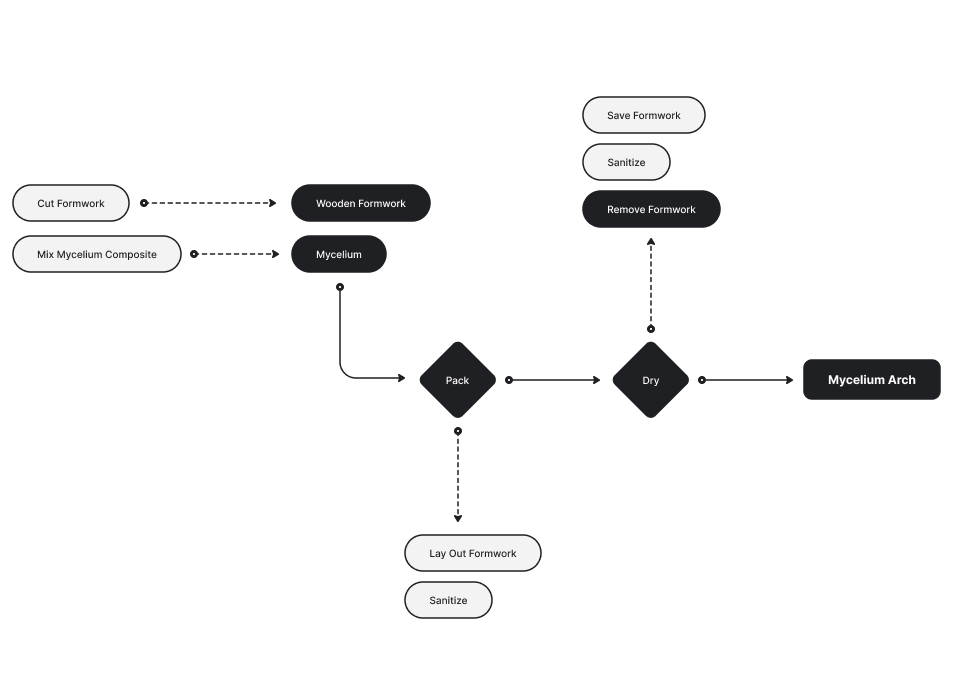
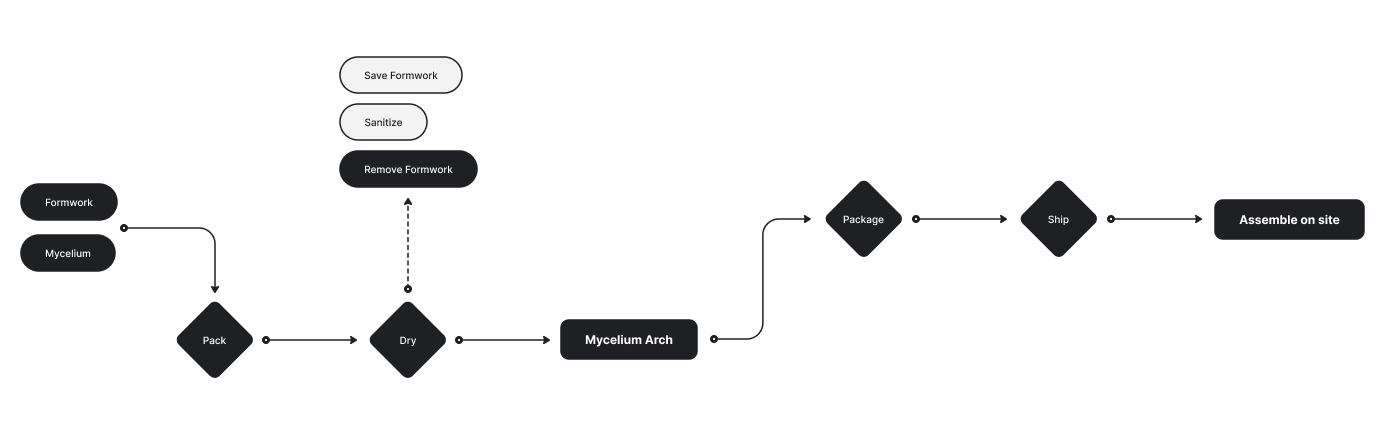
In order to further cut down on emissions, the materials light weight makes it easlity transportable between manuafacturing facilities and building sites. The diagram below illustrates the fabrication and transportation process.
After the research phase, we designed and arch-shaped floor system that acts as a modular building element, making construction more accessible the less trained contractors in underprivileged areas.
The Mycelium is exposed on the underside of the arch, as it provides great acoustical properties and warm wood-like finish.


During this case study, I found that it is important that the brand and its creative physical presence should be reflected in the digital space as well. Doing this is easier said than done, but this case study was an exercise not for re-defining the brand, but bringing its physical (print, model, building, spatial) presence into the digital world in a way that is reflective of what already exists.